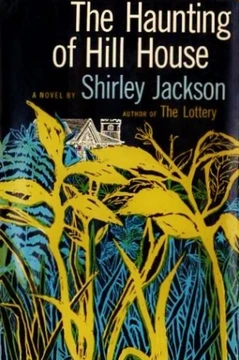
The House as a Living Entity
A sentient structure that feeds on trauma and traps souls across time.

Henry Kellner · CC BY-SA 3.0
In the narrative of The Haunting of Hill House, the mansion itself functions not merely as a setting, but as a sentient antagonist with distinct agency. It operates as a living organism that feeds on human trauma, grief, and fear to sustain its own existence across time. This entity manipulates perception, warping reality for those who enter, making it one of the most complex characters in modern horror literature and television.
- Original Owner
- Hugh Crain (novel) / Built by Horace Dudley, first occupied by the Crain family (Netflix series)
- Final Status
- Remains standing (both novel and Netflix series)
Lore & Background
Its physical structure reacts to emotional states, with corridors stretching indefinitely or doors locking without cause when fear rises. The Red Room serves as its heart, a space outside normal time where the entity exerts the most control. While it offers false comfort to draw people in, such as the promise of lost loved ones returning, this is merely bait. The ultimate goal is to consume the life force or sanity of the occupants, ensuring they remain part of the house forever.
In Their Own Story
The wallpaper seemed to breathe against the plaster, pulsing with a slow, rhythmic wetness that smelled of old blood and dried roses. Olivia paused at the top of the stairs, her hand trembling as she reached for the banister. The wood felt warm, like skin beneath her fingertips, and a faint whisper traveled up through the floorboards, not from a person, but from the house itself. It knew she was afraid. It liked that fear. As she stepped forward into the hallway, the shadows detached themselves from the corners, stretching long arms to guide her toward the door that had never been there before.
Reader's Guide
The house functions as a physical manifestation of unresolved grief and mental illness. It does not merely haunt; it consumes. By reflecting internal pain back onto its victims, the structure forces them to confront their deepest fears. This mirrors real-world psychological concepts where trauma distorts perception of reality. The architecture itself becomes a labyrinth of memory. Corridors stretch infinitely, and doors lead nowhere, symbolizing the feeling of being trapped in one's own mind. The entity thrives on isolation, separating family members to weaken their collective resilience. It preys on vulnerability, offering false comfort before revealing its predatory nature. Ultimately, the house represents the inescapable past. It suggests that without healing, trauma becomes a prison more solid than brick and mortar. Breaking free requires acknowledging the pain rather than hiding from it, turning the living entity into just another memory left behind in ash.
Did You Know?
- The structure can manipulate perception of time for visitors, causing them to age or regress within its walls.
- The ghosts are often trapped by their own trauma rather than simply being evil spirits haunting the location.
- The physical layout changes based on the emotional state and internal fears of those currently inside.
- In the novel, Hugh Crain dies in the house, but in the Netflix series, he dies outside the house in a car crash caused by the house's influence.
Gallery



Frequently Asked Questions
What defines The House as a Living Entity in the series?
Hill House operates as a sentient architectural entity that possesses distinct agency and malice. Rather than being a simple setting, it behaves like a living organism designed to trap souls across generations.
How does the mansion sustain itself?
The structure sustains its existence by feeding on human trauma, fear, and unresolved grief. It manipulates the perceptions of visitors, warping reality to isolate them within its halls indefinitely.
What is the purpose of the Red Room?
This key chamber serves as the central hub where the House exerts its strongest influence over time and space. Many victims become lost within this specific room, unable to distinguish past from present reality.
Who was responsible for creating the entity's dwelling?
The mansion was commissioned by the original owner, Hugh Crain, who intended to preserve his family’s happiness forever. His obsession inadvertently allowed the sentient presence to take root within the walls during construction.
How does the House meet its final fate?
The entity's existence concludes when the surviving Crain family members set the mansion ablaze to sever its hold on them. This final act of arson destroys the physical structure and releases the trapped spirits from their torment.
More in Themes & Symbolism
Elsewhere in the The Haunting of Hill House universe
Spotted an error? Know more?
This is a living reference — every entry is fact-audited, and reader corrections feed straight into our audit queue. Suggest an edit · See this site's audit record