The Cold
The house doesn't haunt you with ghosts. It haunts you with the cold that never leaves.

"The Cold" is a fan-identified narrative thread that runs through the entire 2018 Netflix limited series *The Haunting of Hill House*, created by Mike Flanagan. Rather than a single episode, it functions as a recurring supernatural and emotional motif: the house's unnatural coldness is the first thing every character notices, and it persists as a barometer for the house's malice, the family's fractured bonds, and the boundary between memory and present. In fan discussions, the thread is often treated as its own arc because it escalates from a simple atmospheric detail in the pilot to a full sensory assault in the finale.
The cold operates on two registers simultaneously. On the literal level, Hill House is always below ambient temperature, rooms are ice-cold, and the water in its lake is biting. On the emotional level, the cold mirrors the Crain family's inability to reach one another, the grief that freezes them in place, and the house's patient, patient hunger. Fans who track the motif episode by episode describe it as the show's quiet spine—the thing that never leaves, even when the ghosts do.
- Type
- Thematic narrative thread / fan-identified arc
- Series
- The Haunting of Hill House (Netflix, 2018)
- Creator
- Mike Flanagan
- Central location
- Hill House
- Primary motif
- Unnatural coldness as supernatural and emotional indicator
- Span
- Series-wide (all 10 episodes)
- Tone
- Atmospheric dread, grief, claustrophobia
Lore & Background
In the world of Hill House, temperature is not a neutral physical property. The house generates its own cold, a chill that seeps through walls, pools in corners, and lingers on skin long after a character has left the room. This is not the cold of a poorly insulated Victorian structure; it is active, directional, and almost sentient. Characters describe it as a pressure, a breath against the back of the neck, a dampness that has nothing to do with humidity. The cold is the house's first and most persistent claim on its inhabitants, arriving before any visible apparition and outlasting every exorcism.
The motif deepens when read against the family dynamic. Each Crain sibling experiences the cold differently: one as a physical ache in the joints, another as a numbness that mirrors emotional shutdown, a third as a shiver that will not stop no matter how many blankets are pulled on. The house, in this reading, does not impose a single cold on everyone. It calibrates. It finds the specific temperature at which each person's grief crystallizes and holds them there. The cold is, in the show's internal logic, the house's way of saying *you are mine now, and you will feel it in your bones for the rest of your life.*
Fans who have rewatched the series note that the cold also functions as a temporal marker. In the non-linear timeline, the temperature of a room can signal which era a scene is actually set in, even when the visuals are identical. A character pulling their collar up in a hallway that looks the same as it did twenty years earlier is the audience's first clue that time has folded. The cold, then, is not just atmosphere. It is the show's most reliable compass for the viewer, a sensory anchor in a narrative that deliberately withholds its chronology.
In Their Own Story
The hallway on the second floor has no windows. There is no reason for it to be cold. The thermostat in the kitchen downstairs reads seventy-two, the windows are sealed, the radiators are off, and yet the air in this corridor moves against your face like a slow exhalation from something vast and patient. You press your palm flat against the wallpaper. It is not merely cool. It is the specific, metallic cold of a lake bottom in February, the cold that gets into your teeth and stays there for hours. You pull your hand back. Your fingers are red at the tips, and there is a faint dampness on the wallpaper where your skin was, a small dark bloom that will not dry. Somewhere below, in a room you cannot see, a door opens. The cold shifts. It is no longer pressing against your face. It is pressing against your back, and it is closer than it was a second ago, and you understand, with the slow certainty of a bone ache, that the house has noticed you standing still. It has always noticed. The cold was never the weather. The cold was the house, breathing.
Reader's Guide
The Cold is not a single episode but a thread the showrunner wove through all ten installments, and understanding it requires reading the series as a single breathing organism rather than a sequence.
In the opening episode, the cold is introduced as a simple, almost dismissible detail: the house is chilly, the family complains, a character pulls a sweater tighter. The audience is meant to file it under "old house, poor insulation." But the camera lingers on the breath of a child in a hallway, and the cold is already doing narrative work. It is the house's first word.
By the middle of the series, the cold has become a character. It appears in flashbacks and present-day scenes with equal intensity. A sibling in the past shivers in a room that a sibling in the present also shivers in, and the visual match is the show's way of telling the audience that the two moments are the same moment, folded. The cold is the stitch. When the timeline fractures and the house begins to repeat a night, the temperature is the one constant the viewer can trust. If the air is biting, the house is awake.
In the final act, the cold stops being a metaphor and becomes the mechanism. The house does not need to manifest a ghost to trap its inhabitants. It simply drops the temperature until the family huddles together, until they are pressed into one another, until the cold has done the work that no ghost could: it has made them feel, all at once, the full weight of every cold night they spent apart. The last image the series holds is not a monster. It is a room, empty, and the breath of the camera fogging in the still air.
The connective tissue is this: the house's past is not a memory. It is a temperature. It bleeds into the present the way a cold draft bleeds through a crack in a window—slowly, invisibly, and with the patience of something that has all the time in the world.
Did You Know?
- The show's production design team reportedly kept the set of Hill House at a genuinely lower temperature than the surrounding soundstage, so that actors would naturally hunch, pull at collars, and react to the cold witho
- Mike Flanagan has discussed in interviews that the non-linear structure of the series was designed so the audience experiences the house's timeline the way a character inside it would: without a reliable sense of sequenc
- The cold is one of the few elements that appears identically in both the past-timeline and present-timeline scenes, making it a subtle continuity tool for viewers trying to track which era a given shot belongs to.
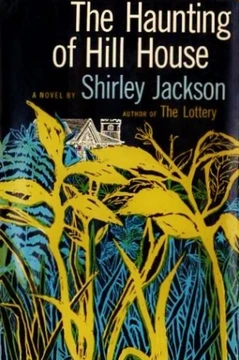
- In the source novel tradition that inspired the show (Shirley Jackson's *The Haunting of Hill House*, 1959), the house's oppressive atmosphere is conveyed through sensory discomfort rather than visible ghosts, a approach
More in Episodes & Narrative Arcs
Elsewhere in the The Haunting of Hill House universe
Spotted an error? Know more?
This is a living reference — every entry is fact-audited, and reader corrections feed straight into our audit queue. Suggest an edit · See this site's audit record