The Door
A door that opens not into another room, but into another time.

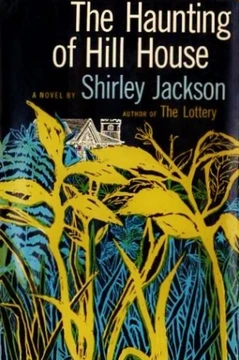
"The Door" is the third episode of The Haunting of Hill House, the 2018 Netflix limited series created by Mike Flanagan and adapted from Shirley Jackson's 1959 novel of the same name. Titled for one of the house's most architecturally and thematically load-bearing features, the episode treats a single doorway as the hinge on which the entire narrative swings—literally bridging the Crain family's childhood trauma inside the house with the adult siblings' present-day confrontation with it.
Within the show's deliberately non-linear structure, "The Door" operates as a pivot point. It deepens the audience's understanding of how the house does not merely haunt its inhabitants but actively folds their timelines together, using thresholds—doors, windows, rooms—as the seams where past and present bleed into one another. The episode cements the door as the show's central metaphor: a boundary that is supposed to separate, but here instead connects.
- Episode number
- 3 of 7
- Series
- The Haunting of Hill House (2018, Netflix)
- Created by
- Mike Flanagan
- Source material
- Shirley Jackson's 1959 novel The Haunting of Hill House
- Central motif
- The door as a threshold between timelines
- Primary characters
- The Crain family (siblings and parents)
Lore & Background
In the world of The Haunting of Hill House, the architecture is never neutral. Every corridor, every staircase, every door is a narrative instrument. "The Door" crystallizes this principle: the house uses its own physical layout to enforce its will, and the door is the mechanism by which it reaches across time. A character who walks through it in the present may find themselves stepping into a memory, or a child from the past may push open a door and land in the adult world of the siblings.
The door motif draws on a long tradition in Gothic and supernatural fiction—the threshold as a liminal space where the rules of the ordinary world suspend. In this adaptation, that liminality is made structural. The show's editing treats the door as a cut point: one side is the past, the other is the present, and the act of crossing is the act of the house rewriting its own history. The Crain family's grief, their fractured relationships, and the house's patient malice all converge on that single frame of wood and glass.
Fans often point to this episode as the moment the show's rules become legible. Before "The Door," the audience is offered fragments—glances, half-heard conversations, a child's hand on a doorknob. After it, the mechanism is clear: the house is not replaying events. It is curating them, selecting which moments to surface and which to bury, and the door is its editing tool.
In Their Own Story
The hallway was longer than it should have been. Theo counted the doors as he walked—seven, eight, nine—and the number kept climbing, the wallpaper shifting from cream to a color he almost recognized. The ninth door was the one. It was slightly ajar, the gap no wider than a finger, and from the other side came the sound of a child humming a tune he had not heard since he was nine years old.
He did not open it. He pressed his palm flat against the wood and felt it vibrate, warm, almost alive, like the flank of a sleeping animal. On the other side the humming stopped. A small hand, pale and sticky with something he refused to identify, appeared in the gap. He pulled his own hand back. The door swung shut with a softness that felt deliberate, satisfied.
Behind him, the hallway was the correct length again. Six doors. The wallpaper was cream. He stood in the silence and understood, with the particular dread of the already-grieving, that the house had not shown him a memory.
It had shown him a choice it was still waiting for him to make.
Reader's Guide
EPISODE 3 — "THE DOOR" Timeline: Interleaves the past (the Crain family's final days in the house) with the present (the adult siblings' return). The door is the literal and figurative seam between these two threads.
Key reveal: The house does not simply trap people in time—it selectively edits their experience, surfacing specific moments through specific architectural features. The door is the primary instrument of this curation. What the audience has been reading as a flashback structure is reframed as the house's own narrative logic.
Reframe of earlier episodes: The ambiguous glimpses in Episodes 1–2 (a child's hand, a half-seen figure in a doorway) are recontextualized. They were not random hauntings; they were the house testing which doors its inhabitants would open, which thresholds they would cross. The door is not a passive object. It is a question the house asks, and the answer determines which timeline the character inhabits next.
Arc connective tissue: By Episode 3, the show has established its two-lane structure. "The Door" is the episode where those two lanes are shown to be the same road seen from different years. The time loop is not circular; it is recursive. The house feeds the past into the present and the present back into the past, and the door is the junction box. The Crain family's grief is the fuel. The house is the engine. And every threshold in the house is a gear in that mechanism.
Showrunner's note: Treat the door as a character. It has intention. It has patience. It does not rush its inhabitants. It simply waits for them to reach for the handle.
Did You Know?
- The episode's title follows the show's pattern of naming each installment after a specific architectural feature of the house, turning the building itself into a table of contents.
- Mike Flanagan adapted Shirley Jackson's 1959 novel, and the door motif in the series echoes the novel's emphasis on the house as a living, architecturally oppressive space.
- The show's non-linear structure means the door functions as an editing device: crossing it is visually equivalent to a scene cut, but one governed by the house's logic rather than the director's.
- The Crain siblings—Theo, Olivia, Erin, Luke, and Shirley—each interact with doors differently across the series, and their relationship to thresholds is a recurring character beat.
More in Episodes & Narrative Arcs
Elsewhere in the The Haunting of Hill House universe
Spotted an error? Know more?
This is a living reference — every entry is fact-audited, and reader corrections feed straight into our audit queue. Suggest an edit · See this site's audit record