Love as Haunting
The house doesn't want to kill you. It wants to hold you forever.

Love as Haunting is the emotional architecture at the heart of The Haunting of Hill House (2018), the ten-episode Netflix limited series created by Mike Flanagan. Rather than treating the house as a mere vessel for jump scares, the show frames it as a lover, a parent, a cradle that holds its inhabitants so tightly they cannot tell comfort from captivity. Every relationship in the Crain family—mother to child, sibling to sibling, the house to its residents—is rendered as a bond so total it becomes indistinguishable from a haunting.
This theme reframes the entire genre of domestic horror. The terror is not that something wants to kill you; it is that something wants to *keep* you, to love you into stillness, to make your walls the only world you can bear to imagine. The show's thesis—that we are, inescapably, the sum of what we love and what has lost us—turns affection into the most inescapable ghost of all.
- Theme
- Love as Haunting / possessive devotion as a form of entrapment
- Medium
- 2018 Netflix limited series, 10 episodes
- Creator
- Mike Flanagan
- Source material
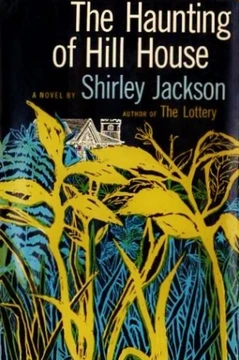
- Shirley Jackson's 1959 novel of the same name
- Central family
- The Crain family (Shirley, Oliver, Theo, Luke)
- Core motif
- The house as a sentient, cradling, jealous lover
Lore & Background
In the world of the 2018 series, Hill House is not a building so much as an organism with a heartbeat. It breathes through its hallways, hums in its walls, and its most tender expression is the nursery—a room with a rocking cradle that seems to sway without wind. The house's love is not malice; it is the suffocating, absolute devotion of a parent who has decided its children will never, ever leave. It offers warmth, safety, a place to belong. The cost is your entire self.
The Crain family embodies this bargain across generations. Shirley's tenderness toward the house is indistinguishable from her tenderness toward her children; she presses her palm to the wood as if checking a pulse, as if the architecture were a sleeping infant. Oliver's love is the counterweight—his attempts to protect his family from the house's embrace, his guilt over what the house has taken. Luke's bond is the most tragic: he does not flee the house's love. He feeds it, speaks to it, treats it as a partner. The house holds him the way a hand holds a glass too tightly, and the glass does not shatter so much as it simply stops being a glass.
Theo, in the present-day timeline, is the one who must look at all of this and name it. Her investigation is not a search for a ghost; it is an act of grief, an attempt to excavate a family that the house loves too well to release. The lore insists that the house has done this before, to other families, in other centuries. Its love is patient. Its love is patient, and it is patient, and it is patient.
In Their Own Story
The nursery is warm in a way that has nothing to do with temperature. Theo stands in the doorway, her breath fogging in the amber light, and the cradle rocks. Slowly. Deliberately. As if it has been waiting for her to stop running. She presses her fingertips to the wood grain and feels it pulse—soft, rhythmic, almost shy. The house is not threatening her. The house is *comforting* her. It is tucking the blanket up to her chin. It is saying, in the language of creaking floorboards and the smell of old lye soap, *you don't have to go back out there. You don't have to be anyone else. Stay. Stay. Stay.* And God help her, the worst part, the part that makes her knees go soft, is that it sounds like what her mother used to say. It sounds like love. It always sounds like love. That is the whole haunting. That is the whole, terrible, beautiful haunting.
Reader's Guide
Love as Haunting threads through the series like a slow-acting poison dressed in a lullaby. In the opening episode, we meet the Crain family in the house's most intimate space—the nursery, with its rocking cradle that seems to breathe. The house doesn't terrify; it *cherishes*. Shirley's tenderness toward the walls, the way she presses her palm to the wood as if taking a pulse, establishes the show's central argument: the most dangerous love is the kind that calls itself protection.
The episode centered on Luke deepens this. His bond with the house is not one of fear but of devotion—he speaks to it, feeds it, treats it as a partner. The house's "love" for him is reciprocal and absolute, and the scene where he is held, where the architecture itself seems to fold around him like arms, is the show's most devastating image of love as imprisonment. Compare this to Shirley Jackson's novel, where the house is a passive, almost geological force; Flanagan makes it a *lover*, jealous and possessive.
By the final episodes, Theo's investigation becomes an act of grief—she is trying to excavate a family that the house loves too well to release. The resonance beyond the plot is universal: we recognize the parent who won't let go, the relationship that defines us so completely we cannot imagine life outside it, the home that is simultaneously shelter and sentence. The show asks whether love and possession are, at their core, the same architecture.
Did You Know?
- The 2018 series reimagines the family from Shirley Jackson's 1959 novel as the Crains (Shirley, Oliver, Theo, and Luke), shifting the narrator's perspective to the daughter investigating her own family's history in the p
- Mike Flanagan has described the house as a character with its own emotional logic—its 'hauntings' are not punishments but expressions of a love it cannot articulate any other way.
- The nursery and its rocking cradle function as the show's central visual metaphor: a place of infantile safety that the house uses to keep its residents in a permanent state of being held, being kept, being *loved* into
- The series' structural choice to interweave a present-day investigation with past family memories mirrors the theme itself—love's haunting is always simultaneous, always happening in more than one time at once.
More in Themes & Symbolism
Elsewhere in the The Haunting of Hill House universe
Spotted an error? Know more?
This is a living reference — every entry is fact-audited, and reader corrections feed straight into our audit queue. Suggest an edit · See this site's audit record