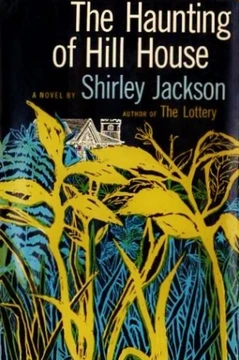
The Garden
The house reaches past its walls, and the garden grows wild in its long shadow.

The Garden is the overgrown, untamed exterior grounds of Hill House, the ancestral hilltop property that anchors the 2018 Netflix anthology series. It is the show's primary outdoor space, the one place where the family can step beyond the house's suffocating walls, yet it remains visually and thematically bound to the house's presence. Wild vegetation, crumbling stone paths, and the ever-present slope of the hill give the garden a sense of slow, organic decay that mirrors the family's unraveling.
Across the framing narrative and the flashback episodes, the Garden functions as a breathing counterpoint to the interior: where the house is rigid, angular, and oppressive, the garden is soft, tangled, and alive. It is where the adult family gathers in the present-day storyline, where the weight of decades of grief finally has somewhere to pool outside the four walls that trapped them for so long.
- Type
- Outdoor location / property grounds
- Affiliation
- Hill House property
- Setting
- Hilltop, surrounding the main house
- Visual state
- Overgrown, neglected, wild
- Narrative role
- Framing-nature gathering space; thematic counterpoint to the interior
- Season
- Season 1 (2018)
Lore & Background
In the world of The Haunting of Hill House, the Garden is never truly separate from the house. The property sits on a steep hill, and the grounds slope downward in a tangle of unkempt grass, creeping vines, and gnarled shrubbery that seems to lean toward the structure rather than away from it. The overgrowth is not merely decorative; it visually communicates that the house's influence seeps into the soil, that what happened inside has bled outward into the landscape. The garden is the house's exhale.
Within the framing narrative, the Garden is where the adult siblings and their mother converge in the present day, the one neutral ground outside the house where they can stand together without the walls closing in. It is also the space where the family's grief becomes physical—where someone might sit on a crumbling stone bench, where the wind moves through the foliage in a way that feels almost deliberate. The garden does not haunt; it remembers. It holds the shape of every argument, every silence, every time someone walked out and did not walk back in.
Thematically, the Garden represents the possibility of life continuing beyond the house's grip. Its wildness is not hostile the way the interior is; it is simply indifferent, growing regardless of what happened in the rooms above. That indifference is, for the family, both a comfort and a wound—evidence that the world does not stop turning for their pain, and that they must choose, eventually, to step into that turning rather than remain frozen in the house's geometry.
In Their Own Story
The path is barely a path anymore. Ivy has swallowed the flagstones, and the grass grows thick enough to muffle footsteps, so that walking through the Garden feels like wading through something alive. Theodora's bench is still there, half-buried in moss, the wood black with years of rain. She sits on it the way she always did, knees drawn up, watching the house from a distance that is close enough to feel its weight but far enough to pretend she isn't part of it. The wind moves through the hedge in long, slow waves, and for a moment the whole garden leans toward the house like a congregation in prayer. She stays until the light goes. She always stays until the light goes. The garden does not judge her for it. It simply keeps growing, patient and green, filling in the spaces where the house's shadow used to be.
Reader's Guide
The Garden is best understood as a character defined by absence and overgrowth. Its layout is simple: a sloping, uneven lawn descending from the house's foundation, a narrow stone path (largely consumed by vegetation) leading toward the front of the house, a weathered bench or two near the mid-slope, and a tangle of hedges and wild shrubs at the lower edge where the hill drops away. There is no manicured geometry here; the design reads as decades of neglect made visible, every line soft and organic where the house is all right angles and sharp sightlines.
Between timelines, the Garden shifts subtly. In the framing narrative it is fully overgrown, the path nearly lost, the bench half-consumed. In flashback sequences the vegetation is slightly less dense, the path more visible, suggesting a time when someone still walked it regularly. The house behind it remains the same angular, oppressive silhouette in every era, but the garden's state of decay tracks the family's emotional distance from the property.
The Garden matters most in the framing-episode scenes where the adult family gathers outside, and in the final episode's outdoor sequences. It is the one location where the show's palette shifts from the interior's cold blues and ambers to a greener, more natural light, and where the characters can finally stand in open space rather than being framed by doorways and stairwells. It reveals that the family's story is not only one of entrapment but of the slow, painful work of stepping outside it.
Did You Know?
- The Garden is the series' primary outdoor setting and the only major location where the family is not enclosed by the house's interior architecture.
- Its overgrown, wild state visually mirrors the family's emotional neglect of the property over the decades, functioning as a physical record of their avoidance.
- The Garden's sloping, hillside terrain is a direct visual echo of the house's name, grounding the property in a specific topography rather than a flat, generic yard.
- In the framing narrative, the Garden serves as the neutral gathering space where the adult siblings and their mother can be in each other's presence without the house's walls mediating every interaction.
More in Hill House & Locations
Elsewhere in the The Haunting of Hill House universe
Spotted an error? Know more?
This is a living reference — every entry is fact-audited, and reader corrections feed straight into our audit queue. Suggest an edit · See this site's audit record