The Uncanny
The home that knows you is the home that unmakes you.

The Uncanny—drawing on Freud's concept of das Unheimliche, the familiar rendered strange—is the structural and emotional engine of The Haunting of Hill House (2018). In Mike Flanagan's adaptation of Shirley Jackson's 1959 novel, the horror is never purely external. The terror lives in the way a mother's love arrives as a bruise, in the way a sibling's face becomes a stranger's, in the way the house you grew up in suddenly has one too many doors. The Uncanny here is not a jump-scare mechanic; it is the slow, sickening recognition that the most intimate things in your life have been quietly, fundamentally wrong.
- Theme
- The Uncanny (das Unheimliche)
- Series
- The Haunting of Hill House (Netflix, 2018)
- Creator
- Mike Flanagan
- Source material
- Shirley Jackson, The Haunting of Hill House (1959)
- Episodes
- 12
- Narrative structure
- Non-linear, multi-perspective
- Core family
- The Crane family (Thea, Luke, Theo, Nell, Olivia)
Lore & Background
In the world of the series, Hill House is not haunted in the conventional sense. There are no poltergeists hurling plates, no specters in white sheets. Instead, the house operates as an uncanny mirror: it reflects the Crane family's buried grief, rage, and love back at them in distorted, inescapable form. A door that should lead to the kitchen opens onto a childhood bedroom. A face in the hallway is almost—but not quite—the person you lost. The architecture itself is wrong in ways the characters can feel in their teeth but never fully articulate, a spatial version of the uncanny where theheim (the home) has become un-heim (the un-home).
The family dynamics amplify this. Olivia's control, Luke's explosive tenderness, Thea's flight, Nell's ferocity, Theo's quiet self-erasure—each relationship is a small uncanny valley where love and cruelty are so intertwined they become indistinguishable. The show's non-linear structure deepens the effect: we meet the family in their present-day estrangement before learning the childhood that made them, so the familiar characters are perpetually slightly off, as if we are looking at a photograph of people we almost recognize.
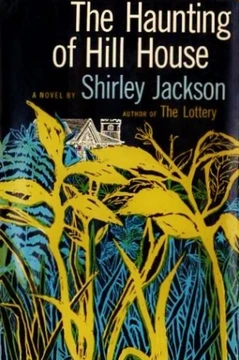
Shirley Jackson's original novel plants the same seed. Eleanor's slow realization that Hill House is a living, hostile organism—that the domestic space she entered for refuge is actually a predator wearing the mask of a home—is the purest expression of the uncanny in gothic literature. Flanagan translates that dread into a family drama where the haunting is, ultimately, the family haunting itself.
In Their Own Story
The hallway stretches longer than it should. You can tell because the wallpaper pattern—the little faded roses your mother chose in 1992—repeats three times before the door at the end, the one that was always the bathroom, opens onto a room you've never seen. Warm light. The smell of burnt toast and something floral, something like the perfume Nell wore the summer she left. You don't walk in. You stand in the hallway with your hand on the banister, feeling the wood grain under your fingers, and you realize with a cold, slow certainty that the house is not showing you a ghost. It is showing you the version of your life where you stayed. Where you didn't run. The door stays open. The light doesn't flicker. It just waits, patient as a mother, for you to decide whether the familiar is enough to walk back into.
Reader's Guide
The Uncanny in this series operates on three interlocking registers: spatial, relational, and temporal, and Flanagan threads all three through the episode structure with surgical patience.
Spatially, the house is never quite right. In the early episodes introducing the 1992 and 1998 timelines, doors open onto rooms that don't correspond to the floor plan, staircases seem to gain a step, and the family's bedroom feels a half-inch too narrow. This is not random set dressing; it is the architecture of the uncanny, the heim made un-heim. The characters navigate it with the low-grade disorientation of someone who has woken up in a room that is almost their bedroom.
Relationally, the uncanny peaks in the Luke episodes, where his "haunting" is not a ghost but his own repressed grief and rage given a face. The person he cannot stop seeing is the person he most needs to grieve, and the house refuses to let him look away. The familiar—his mother, his sister, his own hands—becomes the source of terror. In the present-day framing episodes, the same family sits across a table from each other and cannot make eye contact, and the uncanny is in the silence, in the way a shared meal has become a performance of strangers.
Temporally, the non-linear structure is itself an uncanny device. We learn the ending before the cause. Thea in the present is a ghost to her own past, and Nell's final episode folds time so that the familiar (Thea's face, the house's walls) is simultaneously the most comforting and the most terrifying thing in the frame.
Jackson's novel does the same work with Eleanor: the house is a home, and that is precisely why it is monstrous. The Uncanny resonates beyond the plot because it names the universal dread that the people and places you love most have been quietly, patiently wrong all along, and that you only now have the distance to see it.
Did You Know?
- The series' non-linear, multi-perspective structure was designed so that the audience experiences the family's relationships as uncanny—familiar yet perpetually slightly off—before the backstories explain why.
- Mike Flanagan has described Hill House itself as a 'character' that selects the family, making the haunting an act of recognition rather than invasion, which reframes the uncanny as the house knowing them too well.
- Shirley Jackson's 1959 novel, the source material, centers on a single narrator (Eleanor) whose perception of the house slowly fractures, a structure Flanagan expanded into five Crane-family perspectives to multiply the
- The show's deliberately 'wrong' set design—doors that don't align with adjacent rooms, a staircase that seems to gain a step—was a practical-fx and set-dressing choice meant to create a persistent, low-level spatial unca
More in Themes & Symbolism
Elsewhere in the The Haunting of Hill House universe
Spotted an error? Know more?
This is a living reference — every entry is fact-audited, and reader corrections feed straight into our audit queue. Suggest an edit · See this site's audit record