Family Trauma
The house doesn't haunt the family; the family haunts itself, and the house just holds the mirror.

Family Trauma is the emotional spine of The Haunting of Hill House, the 2018 Netflix limited series created by Mike Flanagan. Rather than treating the haunted house as a simple source of external horror, the show positions Hill House as a magnifying glass for wounds that already exist within the Crain family—grief, abandonment, addiction, identity confusion, and the slow erosion of trust between parent and child. The house does not create the damage; it distorts, loops, and re-enacts it until the family can no longer tell where the haunting ends and the hurt begins.
This theme is told through a deliberately non-linear structure: the viewer meets the Crain children as adults carrying invisible scars, then is dropped back into the house as kids, and then forward again into the aftermath of a suicide that fractures the family into five separate, grieving orbits. The result is a story where every jump cut is a wound reopening, and every 'present-day' scene is shadowed by a childhood memory the character has never fully processed.
- Theme
- Family Trauma / Inherited Grief
- Medium
- Netflix limited series (2018), 10 episodes
- Creator
- Mike Flanagan (writer & director of the majority of episodes)
- Source material
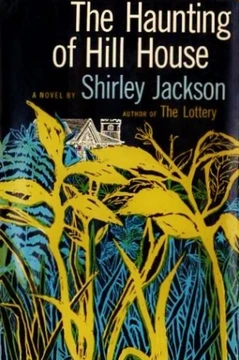
- Shirley Jackson's 1959 novel The Haunting of Hill House
- Central family
- The Crain family (Olivia, Hugh, Shirley, Steve, Theo, Nell)
- Narrative structure
- Multi-timeline, non-linear (childhood / adult / present-day intercut)
Lore & Background
In the world of the series, Hill House is described not as a building with ghosts but as a living predator that feeds on the specific fractures inside a family. Each Crain child enters the house carrying a different vulnerability—Shirley's quiet self-erasure, Steve's need to be needed, Theo's hunger for a home she can't name, Nell's desperate need to fix what is broken—and the house amplifies whichever wound is most tender. The result is a family that, by the time they are adults, has been so thoroughly reshaped by the house's influence that their relationships with one another are almost unrecognizable.
The show's treatment of family trauma is deliberately unkind in its honesty. There is no single villain, no one parent to blame. Olivia's academic detachment, Hugh's slow drift toward absence, the siblings' competing needs for attention—all of these are rendered with a tenderness that makes the audience complicit in the family's dysfunction. The house simply provides the architecture: the staircase that loops, the rooms that shift, the windows that show you a version of your family you are not ready to see.
What makes the theme resonate beyond the supernatural frame is its insistence that trauma is not an event but a pattern. The Crain children do not simply 'get over' their childhood; they re-enact it in their adult relationships, their addictions, their career choices, their silences. The house's final act is not to kill them but to make them sit in a room together and finally say the things they have been circling for twenty years.
In Their Own Story
The hallway smells like dust and old lavender, the kind of scent that belongs to a house that has been waiting. Nell stands at the bottom of the staircase with her hands in her coat pockets, the way she did when she was nine and the steps felt like they were breathing. Above her, the landing is empty. It has always been empty. But tonight the banister is warm, like something just left it, and the wallpaper in the study beyond the door has shifted again—subtly, the way a face changes when it stops pretending to be a stranger.
She can hear her mother in the kitchen, the soft clink of a teacup against a saucer, the particular rhythm of someone trying very hard to be a person in a room that wants them to be a ghost. Nell presses her forehead against the cold plaster of the wall and breathes. The house breathes back. It always has. It always will. And somewhere in the upper floor, in a room with a window that faces the wrong direction, a chair is still turned toward the doorway, waiting for the sister who will never sit down again.
Reader's Guide
Family Trauma in The Haunting of Hill House is not one story but five, braided together by a house that refuses to let any of them heal in a straight line.
Trace it through 'Shirley' and you see the wound in its most devastating form: a suicide that the family is forced to process in real time while the show simultaneously flashes back to the childhood moments that built the pressure. The scene where the siblings gather, each performing a different version of grief—Steve's rage, Theo's numbness, Nell's clinical detachment—lands with the force of a slow-motion car wreck because you have already seen, in fragments, the house whispering to Shirley in ways no one else could hear.
'Hugh' reframes the same trauma as absence. His disappearance is never fully explained, and that ambiguity is the point. The family's search for him becomes a search for the version of the father they needed, and the house offers them a Hugh who is almost right, close enough to break your heart but wrong enough to keep you searching. This mirrors how real families grieve a parent who was there but never quite present.
'Theodora' externalizes the trauma into a relationship the family cannot understand or accept, and the house punishes her for it by making her feel that her love is a kind of betrayal. The scene where she and Lucy are in the house and the walls seem to close is not a ghost story; it is a family story wearing a ghost's face.
Shirley Jackson's novel established the template—the house as a mirror for a family's internal collapse—but Flanagan's adaptation deepens the emotional specificity. Where Jackson's characters are often opaque, the Crain children are rendered with a raw, almost uncomfortable intimacy. The resonance beyond the plot is simple and devastating: every family has a Hill House. It is the conversation you almost had. The door you almost opened. The staircase you walked up and back down for twenty years without stopping to look at the view.
Did You Know?
- Mike Flanagan not only wrote the series but directed the majority of its ten episodes, giving the show a singular, authorial visual and emotional voice.
- The non-linear, multi-timeline structure was a deliberate narrative choice designed to mirror how trauma is actually experienced: in loops, fragments, and flashbacks rather than in a clean chronological arc.
- Shirley Jackson's original 1959 novel, The Haunting of Hill House, is widely regarded as a landmark of Gothic and psychological horror literature and remains in print decades after its publication.
- The Crain family's stories are intercut across childhood, adult, and present-day timelines, meaning the audience frequently encounters the emotional consequences of an event long before seeing its cause, mimicking the wa
More in Themes & Symbolism
Elsewhere in the The Haunting of Hill House universe
Spotted an error? Know more?
This is a living reference — every entry is fact-audited, and reader corrections feed straight into our audit queue. Suggest an edit · See this site's audit record