Loss
The house doesn't haunt you — it holds you exactly where your grief left you.

Loss is the emotional bedrock of The Haunting of Hill House, the 2018 Netflix anthology created by Mike Flanagan. Rather than treating the haunted house as a backdrop for scares, the show positions Hill House as a living embodiment of grief itself — a structure that traps its inhabitants in the exact moment they lost someone they loved. Every Crain family member carries a different wound: a mother who cannot release her dead infant, a daughter who curates her brother's absence like a museum exhibit, a son who freezes his own future in terror of losing the next person he loves.
The theme operates on two levels simultaneously. On the surface, the house haunts them with ghosts and impossible geometry. Beneath that, the house *is* the loss — the locked room, the crooked hallway, the door that won't open. The show's central argument is that the most terrifying haunting is not a specter in the walls but the part of you that still expects the person you lost to walk through the door and say they're fine.
- Theme
- Loss / Grief / Inability to Let Go
- First manifested
- Part 1 (1992 timeline)
- Central to
- All three narrative parts
- Key metaphor
- The house as a living embodiment of unprocessed grief
- Source material
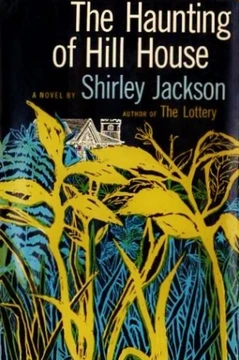
- Shirley Jackson's 1959 novel of the same name
- Creator
- Mike Flanagan
- Platform
- Netflix (2018)
Lore & Background
In The Haunting of Hill House, loss is not something that happens to the Crain family; it is the family. The house absorbs their sorrows the way a sponge absorbs water, and once the grief is soaked in, the architecture itself changes — hallways stretch, rooms multiply, doors lead to the wrong floors. This is not mere gothic staging. Flanagan uses the house's impossible geometry as a visual language for how the mind distorts after a loss: the hallway to the nursery is always longer than it should be, the locked room is always one step further away, the front door is never quite where you left it.
Each sibling's relationship to loss is distinct and deliberately contrasted. Thea's grief is immediate, physical, and desperate — she speaks to the empty crib, she smells milk that isn't there, she cannot let the room be a room. Shirley's grief is architectural; she has built an entire identity around the absence of Oliver, arranging his memory with the careful precision of a curator who is terrified that if she stops tending the exhibit, the person will finally be gone for good. Luke's grief is anticipatory and paralytic; he has lost his parents and his brother, and so he has decided that the only way to prevent the next loss is to stop living, to keep his wife and unborn child in a kind of amber where nothing can be taken.
The resolution the show offers is not exorcism. It is not the house being destroyed or the ghosts being banished. It is the small, unglamorous act of a person choosing to open a door, to let the room be empty, to say the name of the one they lost and let the sound leave their mouth. The house, in the end, is not defeated. It is simply no longer the only room in the house. The Crain family walks out, and the house stands, and the loss remains — but it no longer has the keys.
In Their Own Story
The hallway is longer than it was this morning. Luke knows this the way you know a sentence is wrong before you finish reading it — a feeling in the sternum, a half-second of vertigo. His wife's hand is warm on the small of his back, and the baby kicks, and the floorboards creak in a rhythm that is almost, almost a lullaby. He stops walking. He always stops walking in the long hallways. The one at the end is the nursery. He can feel it the way you feel a draft from a door you haven't opened yet: a cold pressure behind the eyes, a faint sweetness like milk left too long in a bottle. He does not open the door. He has learned, in the long years of this house, that some doors are not locked. They are simply waiting for you to be ready to grieve the thing on the other side. He takes his wife's hand. He walks the other way. Behind them, the hallway stretches, patient as a held breath, and the house breathes with it, and somewhere in the walls a small, wet sound — not a cry, not quite — settles into the plaster like a seed into dark soil, waiting for a season that may never come.
Reader's Guide
Loss in The Haunting of Hill House isn't a subplot; it's the architecture. Mike Flanagan builds the entire house around the idea that grief is a room you can't leave, and the genius is how he makes each Crain sibling inhabit a different locked door.
In Part 1, Thea's nursery sequence is the show's emotional spine — a mother bargaining with a dead child in a room that smells of milk and lavender, and the horror isn't supernatural, it's the refusal to let the crib be empty. Part 2 hands us Shirley, who has turned her loss of Oliver into a kind of curated museum, rearranging his belongings like a woman arranging flowers for a funeral that never ends. And Part 3 gives Luke the opposite trap: he's so terrified of loss that he's frozen his own life, his wife, his unborn child, in amber.
Jackson's 1959 novel is, at its core, about a house that metabolizes human sorrow. Flanagan takes that metaphor and makes it literal — the house doesn't just reflect grief, it *is* grief, with its crooked hallways and impossible geometry. What resonates beyond the plot is how the show argues that the scariest haunting isn't a ghost in the walls; it's the version of yourself that still expects the person you lost to walk through the door. I was sobbing into a blanket at 2 a.m. and I'm not sorry.
Did You Know?
- The recurring idea that 'the house always wins' functions as the show's thesis on loss: grief is not a problem to be solved but a condition to be outgrown, and the house simply outlasts the people who try to fight it.
- Flanagan has discussed in interviews how the show is fundamentally a grief story wearing a horror costume, with the supernatural elements serving as externalized metaphors for the internal experience of losing someone.
- Shirley Jackson's original novel features a house that seems to possess its own will and awareness, a quality Flanagan expanded into a far more explicit and sustained metaphor for trapped, unprocessed sorrow.
- The show's three-part structure — past, present, past — mirrors the non-linear way loss actually works: you can be living in the present and still be trapped, in real time, in the exact moment the person you loved stoppe
More in Themes & Symbolism
Elsewhere in the The Haunting of Hill House universe
Spotted an error? Know more?
This is a living reference — every entry is fact-audited, and reader corrections feed straight into our audit queue. Suggest an edit · See this site's audit record