Repetition and Ritual
The house does not haunt you once; it haunts you on a schedule, like a family dinner you never want to attend.

Repetition and Ritual is one of the structural and emotional engines of The Haunting of Hill House (2018). Rather than presenting a single linear haunting, the series builds its dread through patterns that recur—families circling the same table, characters replaying the same failures, the house's corridors folding back on themselves like a sentence that will not reach its period. Ritual here is not sacred; it is the choreography of avoidance, the way a household performs togetherness while each member is actually rehearsing the same private grief.
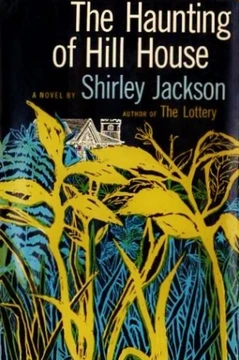
The theme draws directly from Shirley Jackson's 1959 novel, where Hill House exerts a gravitational pull that makes characters return, relive, and repeat. In the Flanagan adaptation, that pull becomes the show's grammar: every episode is a variation on a motif, every family gathering a ritual that promises connection and delivers another locked door. The result is a haunting that feels less like an invasion and more like a habit the family cannot break.
- Theme category
- Structural / Emotional motif
- Source material
- Shirley Jackson's novel, The Haunting of Hill House (1959)
- Series creator
- Michael Flanagan
- Platform
- Netflix
- Aired
- 2018
- Episode count
- 10
- Central family
- The Crain family (Olivia, Peter, Theodora, Luke, Shirley, Nathan)
Lore & Background
In the world of the series, Hill House is less a building than a metronome. Its architecture—repeating doorways, corridors that seem to lead back to the same room, windows that frame the same stretch of overgrown yard—creates a visual rhythm that the characters internalize. They begin to move through their lives in the same cadence: gather, perform, withdraw, repeat. The family dinner table becomes a ritual stage where each Crain member takes their assigned seat, says their assigned nothing, and leaves. The repetition is not accidental; it is the house's way of saying that the pattern is the point.
Ritual in the show carries the weight of obligation rather than meaning. Olivia's repeated invitations to the house, Peter's repeated retreats into the study, Theo's repeated retreats into the attic—these are not choices so much as inherited scripts. The characters do not decide to repeat; they simply cannot access an alternative. This mirrors Jackson's novel, where the house's power lies in making the familiar feel inescapable, where the same hallway visited a second time feels like a trap rather than a passage.
The most unsettling aspect of the repetition is its emotional logic. The same argument, replayed across years, does not grow less painful; it grows more precise. The ritual of saying the wrong thing at the wrong moment becomes so well-rehearsed that the characters perform it with a kind of tragic fluency. The house, in this reading, is not the source of the haunting. The house is the mirror that shows the family their own loop, and the true terror is the recognition: yes, this is the one again.
In Their Own Story
The hallway smells of dust and old wood polish, the same way it always does, the way it did when Theo was nine and the way it does now, when she is twenty-three and the door at the end of the corridor is the same door, the same dark wood, the same small brass knob that catches the light from the kitchen window in a thin, guilty line. She has walked this hallway so many times that her footsteps have a rhythm, a metronome tick, and she does not realize she is humming until the sound stops and the silence fills the space where the humming was. The house is breathing. Or she is. It is hard to tell which. She presses her palm flat against the wall, feels the grain, the tiny imperfections that are the same imperfections she felt as a child, and thinks: again. Not for the first time. Not for the last time. Again. The door at the end does not open. It never opens. She has never opened it. She walks back. The hallway is the same length. It is always the same length.
Reader's Guide
Repetition and Ritual operates as the show's hidden skeleton, and tracing it across episodes reveals how deliberately the series is built on the logic of the loop.
In the opening episode, the family dinner at Hill House establishes the ritual: everyone present, everyone silent, the table set with the same careful symmetry, the same unspoken rules about who speaks and who does not. The camera lingers on the repetition of chairs, of hands reaching for the same salt shaker, of the same awkward pause. This is not a meal; it is a performance the family has rehearsed for years. Jackson's novel does the same thing, making the house's rooms feel like a script the characters are stuck performing.
By the second and third episodes, the repetition fractures into individual obsessions. Theo's repeated withdrawal into the upper floors, her repeated refusal to engage, becomes a personal ritual of self-erasure. Peter's repeated retreat into the study, his repeated deflection, mirrors the same pattern at a different scale. The house's architecture reinforces this: the same doorways, the same angles of light, the same corridor repeating itself so that the characters literally walk in circles.
What makes the theme resonate beyond the plot is its universality. Every family has its rituals—the dinner, the holiday, the way a certain topic is never raised. The show takes that familiar discomfort and turns it into architecture, making the pattern visible, inescapable, and, ultimately, the true haunting. You do not need a ghost to feel trapped in a loop. You need a kitchen table and five people who love each other and cannot say it.
Did You Know?
- The show's title deliberately echoes Shirley Jackson's 1959 novel, and the repetition in the title itself—'The Haunting of Hill House'—mirrors the cyclical structure of the story, where events and emotions loop rather th
- Michael Flanagan has discussed in interviews how the Crain family's dysfunction is presented not as a mystery to be solved but as a pattern to be witnessed, shifting the genre from whodunit to a kind of emotional anatomy
- The house's architecture in the series features recurring visual motifs—identical doorways, repeated window frames, corridors that seem to fold back on themselves—functioning as a visual representation of the characters'
- In Jackson's novel, the concept of the house 'eating its young' is a central metaphor; the 2018 series adapts this idea into the family's repeated failure to protect its most vulnerable members, turning a supernatural im
More in Themes & Symbolism
Elsewhere in the The Haunting of Hill House universe
Spotted an error? Know more?
This is a living reference — every entry is fact-audited, and reader corrections feed straight into our audit queue. Suggest an edit · See this site's audit record