Impermanence
The house was never permanent; neither were the people it held together.

Impermanence is the quiet, aching spine of The Haunting of Hill House (2018). Every relationship, every room, every promise the Crain family makes to one another is shadowed by the knowledge that it will not last. The house itself—once felt like an eternal, inescapable presence—turns out to be the most temporary thing in the story: a vessel of grief that exists only as long as there is pain to hold, and which is ultimately demolished, brick by brick, into silence.
This theme weaves through the dual-timeline structure, where the past self is always already gone by the time the present self looks up. Characters who are children are now adults with different scars. The family that huddled together in the hallway is now scattered across a city, barely speaking. Impermanence in this show is not a philosophical abstraction; it is the thing that breaks your heart at 2 a.m. when the credits roll and the house is just rubble.
- Theme
- Impermanence / Transience
- Series
- The Haunting of Hill House (Netflix, 2018)
- Creator
- Mike Flanagan
- Episodes
- 10
- Source material
- Shirley Jackson's 1959 novel of the same name
- Central motif
- "We go home"—a promise that can never be fulfilled
- Narrative device
- Dual timeline (past and present) emphasizing how every moment is already lost
Lore & Background
In the world of the Crain family, impermanence operates on every scale simultaneously. The house is a living architecture of memory that reshapes its corridors, rearranges its rooms, and ultimately ceases to exist. The family bonds that form inside its walls—Olivia's fierce protectiveness, Hugh's desperate need to be seen, Theodora's quiet observation of a world that will outlast her—are all temporary configurations of people who will grow, grieve, and drift apart. The show treats the past not as a fixed record but as a feeling that fades, and the present as a state that is already decaying.
The demolition of the house in the final act is the theme made literal. Everything the family built, endured, and lost inside those walls is reduced to a parking lot. The supernatural presence that once seemed eternal simply… stops. There is no grand battle, no final exorcism. The house finishes its work, releases its tenants, and is taken down by men with wrecking balls. Impermanence here is not dramatic; it is bureaucratic, quiet, and absolute.
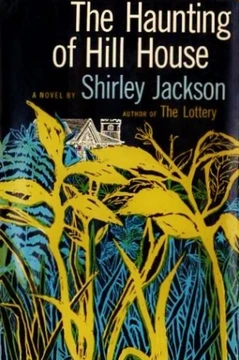
This resonates with Shirley Jackson's novel, where the house is likewise a character that outlasts its inhabitants, but the 2018 adaptation leans harder into the idea that the house was always a temporary wound—a grief made architectural, destined to heal and close. The family does not conquer the house. They simply outlive it, the way you outlive a fever.
In Their Own Story
The wrecking ball swings in slow motion against a sky the color of old bruises. Theodora watches from the sidewalk, her reflection ghosting in the shattered window glass of what used to be the hallway. A brick the size of her fist tumbles into the dust. She thinks: *we go home.* She thinks it the way you think a name you used to know, the syllables still there but the person gone. The house groans, a long wooden sigh, and the attic door—her door, the one that was never quite right—splinters and falls inward into its own memory. No one is coming back through it. No one is coming back through any of them. The dust settles, and the parking lot is just a parking lot, and the afternoon light moves on without asking anyone's permission.
Reader's Guide
Impermanence in Hill House is not a subplot; it is the grammar the whole story is written in. In Episode 1, the family gathers in the house and the phrase "we go home" is spoken like a covenant, a small liturgy against the void. But the dual timeline immediately undercuts it: the adults we see in the present are already the people the children have become, and the children are already gone. The promise is made in a tense that no longer exists.
By Episode 5, the attic scene crystallizes the theme. The family is together, huddled, alive, and the moment is so tender it feels like a held breath. But we know—structurally, emotionally—that this configuration will not survive the night. The show gives us the togetherness and then takes it, and the taking is the point. In Shirley Jackson's novel, the family's dissolution inside the house is more ambiguous, more of a slow erosion; Flanagan's version makes the loss explicit, a door closing on a room you can never re-enter.
Episode 10 delivers the final, devastating image: the house demolished. Not haunted out, not exorcised—demolished. The impermanence is total and unglamorous. What resonates beyond the plot is how the show validates the grief of losing a version of yourself, a version of a family, a version of a home. You cannot go back. The house is a parking lot. The children are adults who flinch in doorways. And that is okay. That is the whole, aching point.
Did You Know?
- The house's demolition in the final episode is played almost entirely in practical, unglamorous detail—wrecking balls, dust, silence—rather than as a supernatural event, reinforcing that impermanence is mundane and inesc
- The dual-timeline structure means the audience always watches the past as a lost present, so every warm family moment is simultaneously a memory already fading, embedding impermanence into the act of viewing itself.
- In Shirley Jackson's 1959 novel, the house's relationship to its inhabitants is more ambiguous and its 'permanence' more threatening; the 2018 adaptation reframes the house as a temporary grief-container that ultimately
- The recurring phrase "we go home" functions as a kind of broken incantation—the family says it as a promise, but the show's structure ensures that the 'home' they return to is never the same one they left, making the phr
More in Themes & Symbolism
Elsewhere in the The Haunting of Hill House universe
Spotted an error? Know more?
This is a living reference — every entry is fact-audited, and reader corrections feed straight into our audit queue. Suggest an edit · See this site's audit record