Identity Erosion
The house doesn't kill you. It replaces you with a better story and calls it mercy.

Identity Erosion is the central thematic architecture of The Haunting of Hill House (2018), the Netflix limited series created by Mike Flanagan and loosely adapted from Shirley Jackson's 1959 novel. Rather than treating the house as a passive setting or a simple ghost-story backdrop, the series frames Hill House as a predatory entity that does not merely frighten its inhabitants—it consumes them. Specifically, it devours their sense of self, replacing their complicated, flawed, human identities with sanitized or frozen versions that serve the house's need to feed on guilt, shame, and unresolved trauma.
This theme threads through every Crain family member's storyline. Theodora's years in a coma, Peter's hospital awakening, Shirley's endless loop, and Luke's ghostly stasis are all variations on the same horror: the slow, seductive annihilation of who you actually were in favor of who the house needs you to be. The result is a story that feels less like a supernatural thriller and more like a psychological autopsy of the self.
- Theme
- Identity Erosion / Self-Consumption
- Primary vehicle
- Hill House (the sentient, feeding structure)
- Affected characters
- Theodora, Peter, Shirley, Luke, Olivia Crain
- Series
- The Haunting of Hill House (2018, Netflix)
- Creator
- Mike Flanagan
- Source material
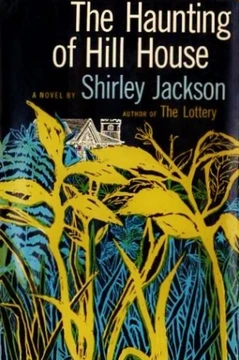
- Shirley Jackson's novel 'The Haunting of Hill House' (1959)
- Narrative structure
- Parallel family timelines converging into the house's origin
Lore & Background
In the world of The Haunting of Hill House, the house is not a building that happens to be haunted. It is a living, hungry thing that metabolizes the emotional lives of the people who enter it. Its feeding mechanism is not blood or flesh but identity: it isolates a person's guilt, their worst memories, their sense of failure, and then it *edits* them. The person who walks out—or, more often, the person who never walks out at all—is no longer the person who walked in. They are a version the house has curated, a character in the house's own story rather than the author of their own.
This is why the Crain family's individual timelines feel so structurally similar yet emotionally distinct. Theodora's erosion is maternal and temporal: the house offers her a life where her children never existed, where her guilt has no referent, where she is the 'good' woman who never caused harm. Peter's erosion is narrative: the house rewrites his story so he is the devoted son who stayed, erasing the complicated truth of his absences and his choices. Shirley's erosion is cyclical: trapped in a repeating loop, her identity is ground down like a record needle in one groove, each pass removing another layer of agency and selfhood until she is a pattern rather than a person. Luke's erosion is the most final: as a ghost, his identity is frozen in the moment of his death, a self that can no longer grow, change, or even grieve.
The house's ultimate 'gift' is always the same: a self that is simpler, less guilty, less *real*. And the horror is that for a moment, it feels like relief. That is the erosion. Not the loss of identity, but the seduction of surrendering it.
In Their Own Story
The hallway smelled of wood polish and something older, something like the inside of a closed eye. Theodora walked it the way she had walked it for what she was told was twenty-seven years, though the walls kept shifting the distance, keeping the door at the far end always one more step further away. She could feel it happening again, that soft unspooling behind her sternum, the thread of her name pulling loose from the person wearing it. The house hummed through the floorboards, a low and patient sound, the way a parent hums a lullaby to a child who has stopped crying. She pressed her palm flat against the wallpaper. Beneath the pattern, something warm shifted, something that had been a woman once, something that had a mother once, something that was now just another layer of the wall, indistinguishable from the plaster, feeding the next person who would press their hand there and feel, just for a second, that they were not alone. Theodora pulled her hand back. The wallpaper was cool again. She walked on. The door was still one more step away.
Reader's Guide
Identity Erosion in The Haunting of Hill House isn't a subplot—it's the engine. The series asks one devastating question: what happens when a house doesn't just haunt you but *replaces* you?
In 'The House That Built Me,' Peter wakes from his coma into a world where the house has already rewritten him. The Peter it offers is the son who stayed, the man without the ugly truth of who he actually was. His real identity—flawed, absent, complicated—is devoured in the slow, seductive logic of a narrative that promises wholeness by making him someone else.
'The Other One' performs the same surgery on Theodora. Her years in a coma are, in the house's telling, a death of the self. The identity that erodes is maternal and specific. The house doesn't destroy her with violence; it destroys her with *kindness*, offering a better story and calling it mercy.
Shirley's loop in 'The Door' is erosion made literal: repetition as identity death. Each cycle strips another thread of agency until she is less a person than a pattern the house feeds on.
What makes this resonate beyond the plot is how accurately it mirrors trauma itself—how guilt can feel less like something that happens to you and more like something that *replaces* you. The house externalizes that process, and the series still aches weeks after the credits because it never lets you avoid the question: if the version of you that survived is the one the house made, are you still you?
Did You Know?
- Mike Flanagan has described Hill House as a character in its own right, meaning the 'villain' is not a ghost or a person but the architecture itself, which actively curates and consumes the identities of those inside it.
- The series' parallel-timeline structure—where each Crain family member's story unfolds in a different era before converging—mirrors the theme itself: the house is eroding each person's identity in a different way, at a d
- Shirley Jackson's 1959 novel, which the series loosely adapts, similarly presents the house as a force that distorts perception and selfhood, with its protagonist Eleanor gradually losing the boundary between her own ide
- The show's visual language reinforces the theme: as characters spend more time in the house, the color palette drains, the architecture becomes more asymmetric and oppressive, and the characters' costumes and mannerisms
More in Themes & Symbolism
Elsewhere in the The Haunting of Hill House universe
Spotted an error? Know more?
This is a living reference — every entry is fact-audited, and reader corrections feed straight into our audit queue. Suggest an edit · See this site's audit record